Saturday, 7 May 2016

डढेलोको फन्दामा परेको कोटडाँडा

एक हप्ता अगाडि, पानी पर्नु अघि, देशका बिभिन्न ठाउँमा डढेलो सल्किएको बेलामा, बिशंखु नारायण माथिको डाँडा पनि त्यस्तै डढेलोको चपेटामा पर्‍यो । त्यो शुक्रबार काठमाण्डुबाटै देखिन्थ्यो धुवाँको मुस्लो सिंगो कोटडाँडालाई नै ढाक्ने गरि फैलिएको । तर जे भएको थियो त्यो त राती नै भएको
रहेछ । रातभर गाउँबासीको नसुतेर, आगोको घेरालाई बस्तितिर नछिर्न, अनेक जुक्ति झिकेका
रहेछन् । रातभरको मिहेनतले गर्दा, मानवीय र धनजनको क्षति हुनबाट जोगिएको रहेछ । जोगिने घरबारी मध्ये हाम्रो पनि पर्‍यो, कोटडाँडाबासीको कृपाले । आज माथि जाँदा अलिकति भेउ पायौँ हामीले त्यहाँ राती कस्तो भयाबह स्थिति थियो भनेर ।
जति जीवजन्तु भाग्न सके, ती त बचे होलान, तर चल्ला काड्ने बेला, गुँडमा रहेका बचेराहरू, अनि छिटो हिँडन् उफ्रन नसक्ने किरा फटेङ्रा र अन्य जीवजन्तु त कत्ति मरे होलान् । लुक्ने, बस्ने ठाउँ डढेर होला, बाघ (पाटे बाघ पनि चितुवा पनि, दुबै थरी, भन्छन् गाउँबासीहरू) पनि बस्तिमा चाहार्न थालेका छन् रे । पाठाहरू बेपत्ता पारेका छन् रे, गर्जँदै कान्ला कान्ला हिँडेका छन् रे । भुकम्पले घरबार भत्काएर कटेरोमा आफु र बस्तुभाउ पनि बस्न बाध्य भएको बेला, आगो र जन्तु सँग जोगिनु परेको छ कोटबासीलाई ।
 
 
तलैबाट देखिन्थ्यो डढेलोले कसरी तल देखि माथि सम्म बन मासेको रहेछ भनेर...
 माथि जाँदै गर्दा कतै भसक्कै पारेको देखिन्थ्यो भने, कतै हरियाली जोगिएको पनि देखियो
 स-साना बुटाहरू चाँही जलेका,
 सल्लाको चाँही कालो खम्बा सरि डढेका
 डढेको सल्लाघारी
 'फाएर ब्रेक' को काम गर्नु पर्ने सडक, तर त्यसो भएन । बतासले दन्काएको आगोको लप्काले यो सडकलाई सजिलै पार गरेछ
 एक हप्ता अघि, पुरै कालो भएर डढेको जमिनलाई सुकेर झरेको सल्लाको पातले ढाकी सकेछ
 आगो कताबाट कतागएको थियो भन्ने कुरा यो रूखको डढेका पातबाट थाहा हुन्छ , सबै उँभो फर्किएका छन्
 सेपिया रङ पोतिएको जस्तो बन
आगोले कुन रूखलाई कत्तिको खायो भनेर प्रश्ट देखिन्छ, कुनै पूरै डढेका, कुनैलाई आगो राफले मात्र छोएको, कुनै  माथिबाट हरियो पलाइसकेका, अनि कुनै सग्लै...
 यो रूखको आधा भागमात्र डढेलोको फन्दामा परेछ
 कोटबासीको मिहेनतले, आगो यो बाटो भन्दा आउनबाट रोकिएछ । हाम्रो घरको गेटकै छेउ सम्म पुगिसकेको रहेछ ।
 
 
बाक्लो झाडी भएको ठाँउ त अब छ्याङै देखिने भएछ  
डढेर  कुनै रूखहरूका पात कालो, कुनै खैरो, कुनै चाँही सेतो ।  श्यामश्‍वेत  फोटो जस्तै
 
 हरियो हुनु पर्ने सल्लाघारी...
यस्तै बादलबाट घाम चिहाउने होइन, पानी अझै परिदिए त देशभर अझै सल्किरहेका डढेलोहरू निभ्ने थिए

Sunday, 13 March 2016

Ropain along the Tadi and Likhu

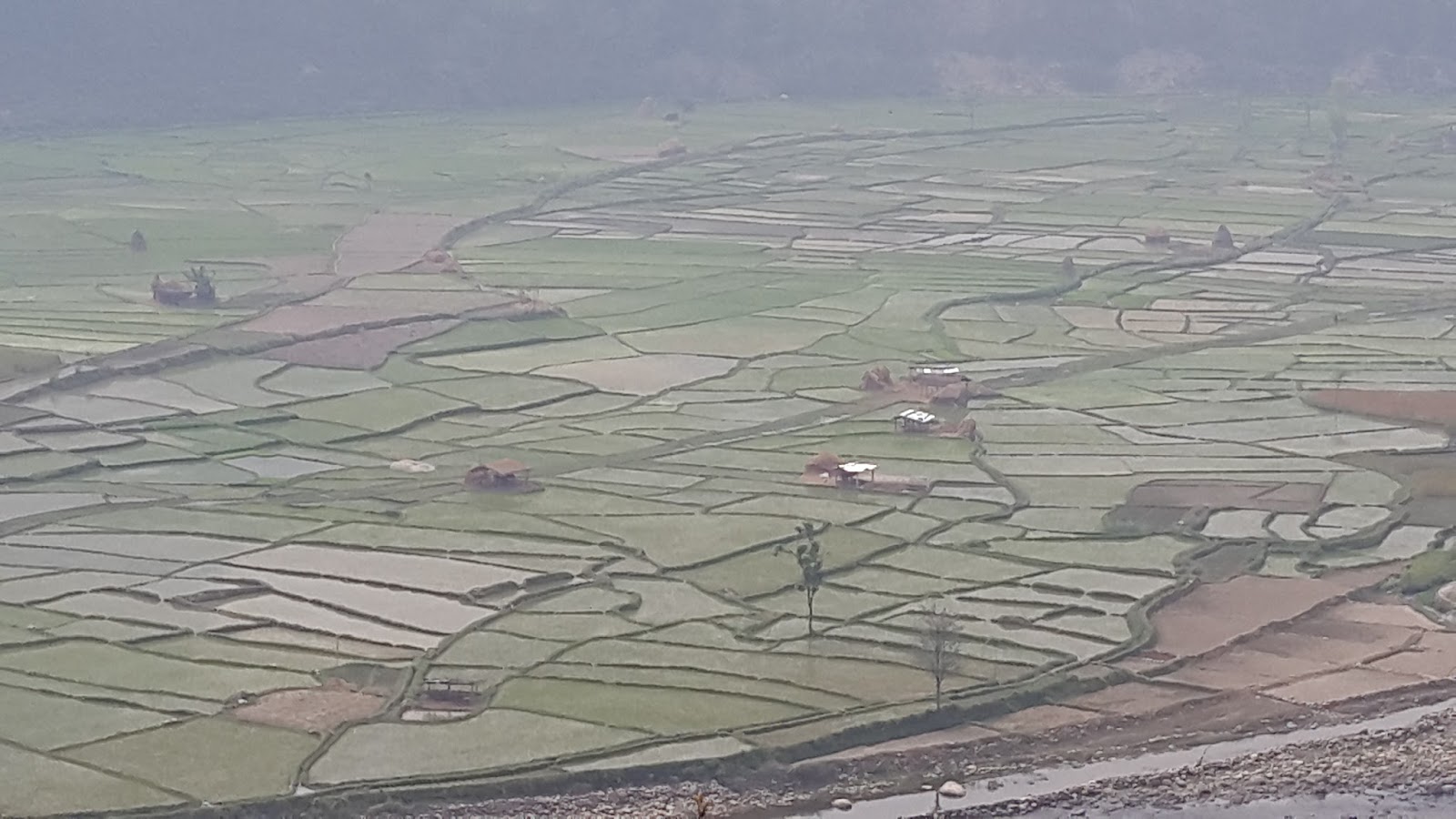
It's ropain (paddy plantation) time along the banks of the Tadi and Likhu Khola in Nuwakot.  Some images from yesterday.  By the time the rest of the country gears up for ropain around June, these farmers would be ready to harvest this current crop of paddy.. and would be looking to plant the second crop too...
 
It was a heartening sight to see people engaged in ropain.  For me it symbolised hope.. looking forward to the future harvest amidst the destruction left by the earthquake, which the people have yet to rise out from...
 
the fields flooded and readied for plantation
 this field already has a 'stubble' of paddy
 it is a hard, laborious work... whether doing it is done manually..
 ... using oxen...
(and in action...)
  
... or using some mechanical help...
...patchwork of readied fields and  those that have seen ropain already...
 
 ... where patches of seedlings still remain...
... women bundling up the paddy seedlings for transplantation...
 ... while men dig, level, muddy and plough the fields, the women mainly transport the manure, and then plant the paddy.. families and neighbours help out in each others' fields... 
.. taking rest after a hard day's work...
... brown mud fields will soon turn green... like the field at the bottom of the hill...
 .. the water of Likhu Khola helps to irrigate the paddy fields... below the 'tar'...


 .. and up on the tar .. sacks of freshly dug potatoes stand like sentinels...
...across the paddy fields... makeshift tin shelters surrounds a little village destroyed by the earthquake.  Like other villages across the central hills, it is yet to rise from the rubble...
... a freshly planted paddy field next to the remains salvaged from an earthquake damaged building for me symbolises hope ...


Wednesday, 16 September 2015

ruins taken over by monsoon

these are pictures that i have taken in kathmandu valley and outside, mainly on the way to and back from dolakha, the epicentre of the 12th may aftershock. it's been over four months since the 25th april earthquake, and it shows in the mossy growth, weeds, and even paddy and corn plants over ruins, atop homes.  monsoon...
 
two months before the earthquake, when we'd driven past this building in sankhu it was standing tall and proud, all three stories of it...
 
 
 still in sankhu, weeds, flowers, yam thrive over a rubble.
.. and behind this overgrowth of  what looks like paddy (must've been growing from stored grain) and weeds is a door that must  have led to a room.. to a veranda or the stairs...
 on the way to dolakha,  corn grows from the top of this dilapidated house.. again the family must've have stored their seeds in the collapsed attic... there was only one house that i saw in the  whole place, where the family had actually used the flattened roof with mud from the collapsed upper floors as a vegetable patch to grow mustard greens!
 in jiri, a staircase leading upto .. ummmmm
 vegetation creeping up this old house in dolakha bajar
 vegetation has overtaken this ruin
 moss on a ruined wall of a building in dolakha bajar
 looking down at the ruins of the tripurasundari temple in dolakha
 a squash vine creeps up the side of a building that is standing in charikot that still carries traces of the walls of the building adjoining that collapsed during the may 12th quake
 a veranda of a home that tumbled down just below charikot bajar
 corrugate galvanised iron sheets helped many survivors of the earthquake to ward off the monsoon rains... most of the hillsides in dolakha and elsewhere are dotted with these tin sheds that brightly reflect the midday sunlight.. behind this tin shed, weeds and corn grown on top of the ruined home 
the blue doorway that must have opened unto a veranda in this ruined house below charikot, just above tama koshi
 moss has covered the entire covered structures in jungu vdc in dolakha
 this school in jungu lost all of its 19 classrooms in the second quake.  the school must be located less than ten miles as the crow flies, across the tama koshi from sunkhani village, the epicentre of the may 12th quake
 rain clouds hug the hillside behind this stupa with its toppled gajur in jiri
soothing greenery as one  looks southwards from gairimudi vdc. the tama koshi winds its way towards ramechhap
 closeup of the group of homes  from the same place...  ruins amongst the greenery
 an octogenarian couple in front of  ruins of what used to be a two and a half storey home
 a moss covered chaitya a little way down the village.. mainapokhari vdc can be seen in the distant hill
squash vines taking over the rubble of these homes in gairimudi ward # 7 
 the head sir of this school in gairimudi was lamenting how they lost all 24 classrooms, including 12 computers, 2 printers, 1700 books in the library..
 across the road from the school lies the ruins of a house, again being overtaken by weeds
 heading down south towards ramechhap.. amidst the green paddy fields lie what look like bombed out homes
 a little bit south of manthali, next to the tama koshi.. another torn apart settlement
 back in kathmandu.. looking in from the gap between corrugated sheets, weeds do not seem to have taken over the dharahara stub.. probably because there was not mud? just limestone mortar?
on closer inspection.. some moss beginning to grow on the bricks
 moss also claiming the inside wall where visitors have been warned not to spit tobacco, pan parag etc... how many of those nearly 200 souls who lost their lives when dharahara fell must have read this warning on their way up or down the 213 steps?
 the destroyed parapet on the south western side in which direction the dharahara fell on 25th april
 in basantapur.. weeds seem to be reigning supreme
the walls behind these weeds still have the army's attendance charts 
below too weeds grow unhindered over debris 
walls show the tell-tale signs of rain  swept mud  
 
pillars of gaddhi baithak turning green  with the weather
 a closer look
 .. and moss below...
 and a single corn plant.. probably taken by the numerous pigeons that abound the area?
in tundikhel rubble from dharahara and the basantapur monuments are nearly covered up with vegetation
 
 and looking northwards. .are the lumps of rubble from other houses in the city
 closer look
 
 as the sun sets over the rubble of kathmandu's famed monuments.. and an empty space in the background where the dharahara once stood erect